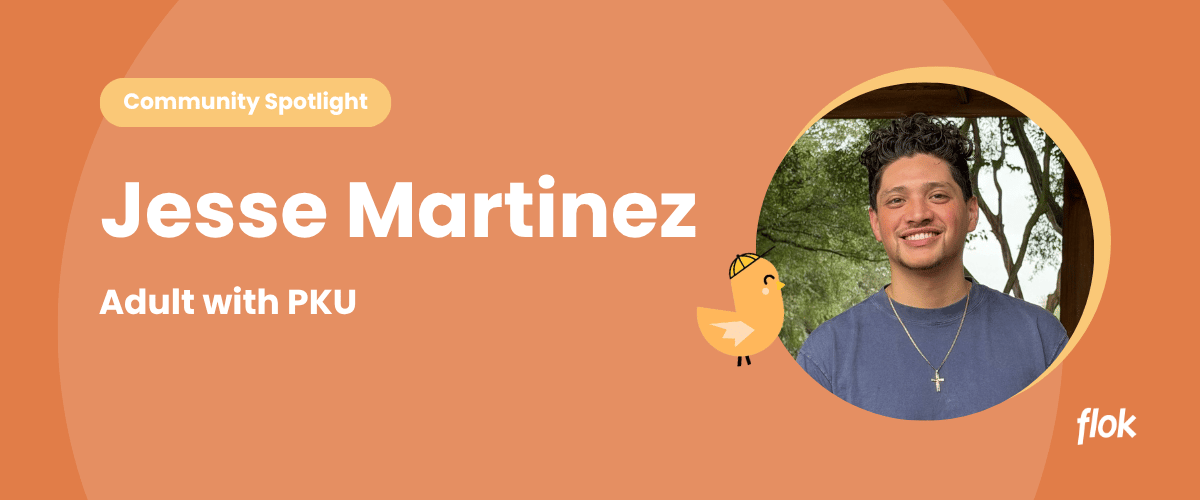
May is both PKU Awareness and Mental Health Awareness Month. We’re spotlighting a community member whose journey reflects both the challenges of PKU and the meaningful paths it can inspire.
Jesse Martinez’s experience growing up with PKU shaped his interests and guided him toward a career in mental health. His story is a reminder that mental health is an essential part of PKU care—not a separate conversation.
Growing Up
Jesse Martinez grew up in Texas alongside his older brother, who also has PKU. Both were diagnosed with Classical PKU and followed a strict diet of less than 5 grams of protein per day.
His mother and grandmother became experts at low-protein cooking—preparing breads, tortillas, and pizzas all from scratch. “They would improvise and make up recipes—like low protein tacos, or big portabella mushrooms instead of steaks.”
It wasn’t until school that Jesse felt set apart by his PKU diagnosis. “I went through a separate lunch line, and that’s when I noticed I’m a little bit different. But I always had my brother to look up to, and knew I wasn’t alone in this.”
Still, the differences were not always easy to navigate. Jesse remembers the times he felt isolated or bullied in social situations.
“People always had pizza and cupcakes at birthday parties, and when I didn’t eat those things I’d get questions like, ‘Are you scared to get fat?’ I’m 28 now, and that stuff stuck with me.” These moments shaped how he understands PKU today—not just as a metabolic condition, but as something that affects daily life and confidence—and the need to have early interventions and support for kids.
Expanding His Diet
When Jesse was 16, he joined a clinical trial for Palynziq, after not responding to Kuvan. The results were life-changing—his phenylalanine (phe) levels dropped, and his protein tolerance increased dramatically. Eventually he was able to eat up to 100 grams of protein per day, allowing almost a completely unrestricted diet. “The first time I tried steak, I didn’t even like it,” he laughs, “but it was really cool to finally have the option to try it.”
While an expanded diet brought more freedom and energy, the treatment itself came with challenges. Frequent injections led to scar tissue development, and inconsistent absorption of the medication. He recently tried Sephience, an oral therapy, but did not respond to the medication.
“Treatment for PKU is challenging because there are options out there, but everyone responds differently and you don’t know what’s going to work for you.” 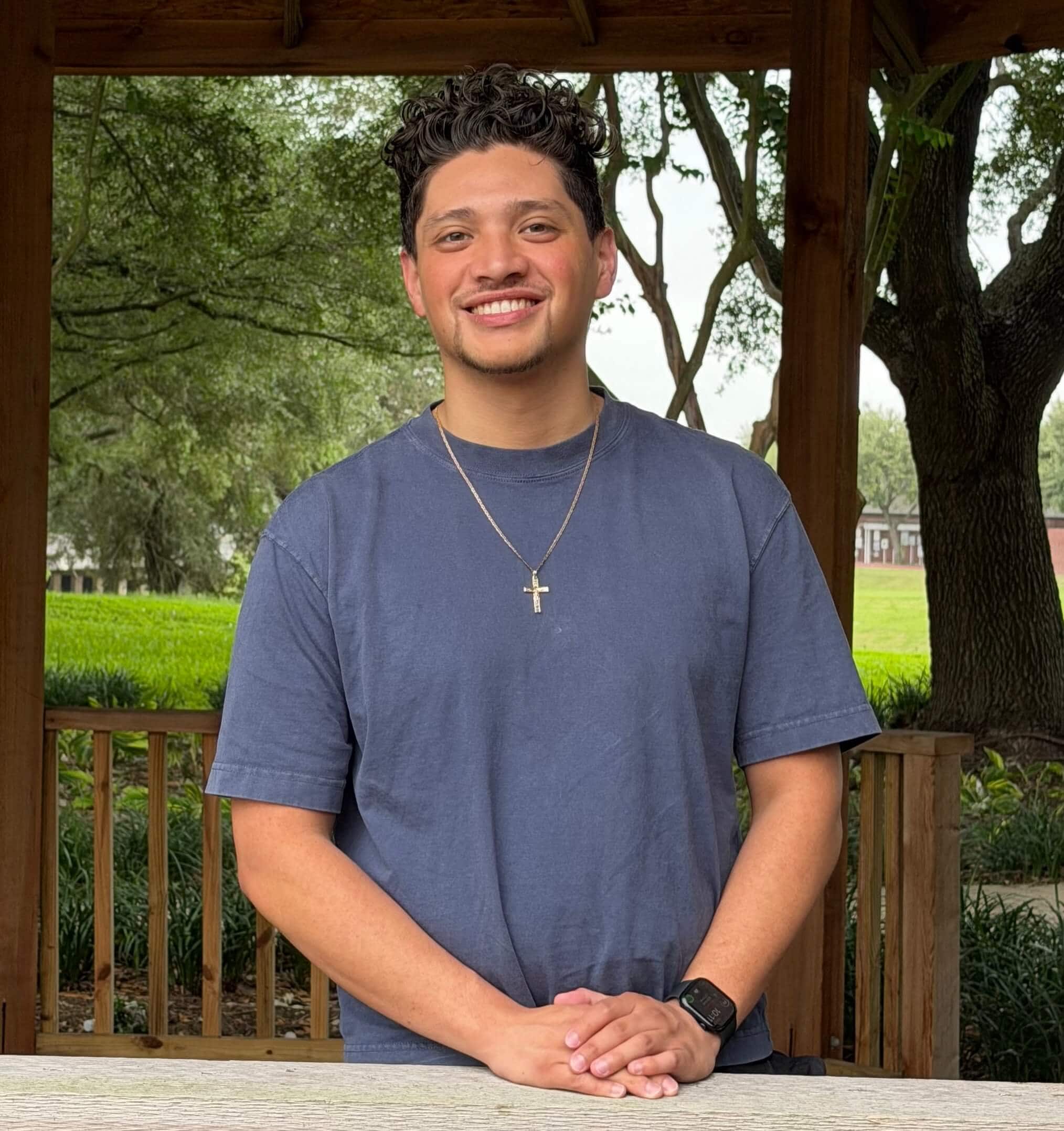
Mental Health & Finding His Path
As Jesse got older, his experiences with PKU began to shape his future in a new way. An undergraduate psychology class sparked his interest in mental health—and today, he’s turning that interest into a career. After majoring in psychology with a minor in sociology at the University of Houston–Clear Lake, he begins a master of science program in Clinical Mental Health Counseling this August.
“I want to work with minority groups and better understand how mental health disorders are expressed differently across cultures,” he shares. “Being bilingual will also help me connect with different groups.”
Jesse credits his strong support system—and personal resilience—with helping him manage both PKU and his mental health.
“There’s a lot of stigma around having a different diet. Not everyone will understand—and that’s okay. You have to take care of your health.”Looking Ahead
Jesse hopes the future of PKU care continues to evolve—especially for younger generations.
He would like to see more treatment options that are easier to manage, particularly alternatives to frequent injections. And like many in the community, he wants insurance companies to provide better coverage for medical foods and formula, which can put significant financial burden on families.
For people living with PKU, access to care matters. So does feeling understood and supported in their mental health.
This May—and every month—we’re reminded that caring for the PKU community means caring for the whole person.